Hospital Environmental Services teams face severe operational challenges today. Eliminating facility-acquired infections requires rigorous cleanliness across patient areas. Traditional cleaning tools degrade rapidly under strong chemical disinfectants like sodium hypochlorite. Standard mops also fail to provide adequate mechanical agitation for stubborn biofilms.Deploying a specialized microfiber bleachable scrub mop solves this critical conflict. This hospital-grade microfiber solution withstands aggressive chemical exposure while tough fibers scrub surfaces thoroughly. Hospitals elevate healthcare cleaning standards and achieve measurable infection-prevention benefits. Furthermore, facilities gain up to 25 percent labor savings through efficient floor coverage. Modern healthcare environments protect patient health while lowering long-term operating costs.
Key Takeaways
Specialized bleachable microfiber mops resist strong chemical damage while scrubbing away tough hospital dirt.Synthetic mops remove ninety-five percent of bacteria and perform much better than standard cotton mops.Zone color-coding prevents cross-contamination by keeping specific mops in designated patient areas.Lightweight frames and low-friction designs lower physical strain on hospital cleaning workers.Flat microfiber mops deliver up to twenty-five percent labor savings through efficient floor coverage.Reusable microfiber mops endure over three hundred high-temperature wash cycles without losing shape.Controlled chemical release lowers water waste and reduces long-term operational costs for facilities.
The Science Behind the Microfiber Bleachable Scrub Mop
Material Composition and Bleach Tolerance
Modern sanitation requires advanced textile engineering. Standard cleaning materials degrade quickly when exposed to strong sodium hypochlorite disinfectants. Synthetic fibers overcome this limitation by resisting chemical degradation during rigorous disinfection routines. High concentrations of sodium hypochlorite will not break down the core polymer structure of these specialized materials. Facilities maintain strict hygiene standards without damaging their physical cleaning inventory.
Polypropylene Abrasive Strips for Heavy Macrostains
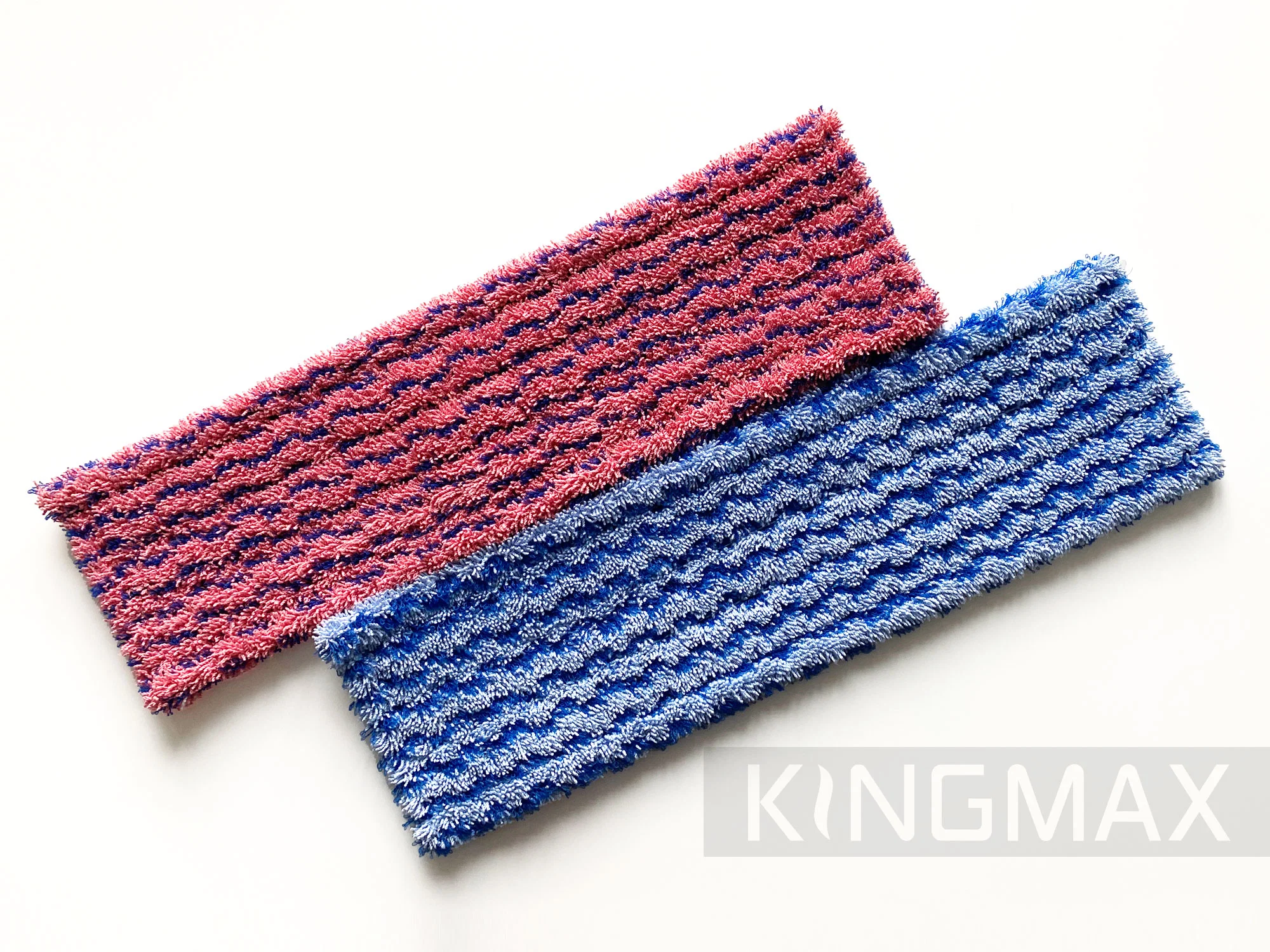
Heavy dirt and dried organic spills demand mechanical agitation. Specialized mops feature integrated polypropylene abrasive stripes woven directly into a high-performance jacquard pattern. These coarse synthetic strips scrape away stubborn macrostains without scratching delicate surface layers or modern floor coatings.
Polyester Micro-Fibers for Fine Particle Capture
Densely woven polyester micro-fibers trap microscopic debris across smooth and uneven surfaces. Fine synthetic strands reach deep into tiny surface pores to lift embedded dust. This precise physical capture mechanism yields superior cleaning performance on critical environmental surfaces throughout busy medical centers.
Tri-Blend Microfiber Liquid Absorption
Advanced floor tools utilize a specialized tri-material jacquard weave to maximize fluid dynamics. Combining three distinct synthetic materials optimizes moisture distribution during routine floor care cycles.
Polyester and Polyamide Mix for Solution Retention
A dedicated blend of polyester and polyamide fibers creates exceptional fluid retention. This balanced mix holds disinfectant solutions securely within the internal textile matrix. Environmental Services teams rely on high-quality microfiber products to achieve even chemical application across large floors.
Controlled Chemical Release During Mopping
The engineered material structure releases chemical solutions at a uniform rate across every square foot. This metered liquid delivery ensures consistent contact time for active disinfectants across every cleaning shift.Traditional cotton mops achieve a 30% bacteria reduction and remove 23% of viruses.Synthetic mop pads achieve up to 98% bacteria reduction with water only and remove 93% of viruses.Specialized bleachable designs pick up 75% more dirt and dust per swipe than traditional options while achieving approximately 95% bacteria reduction.
Low-Friction Scrubbing Action
High cleaning friction causes operator fatigue and inconsistent surface coverage. Specialized microfiber construction lowers drag force while maintaining firm surface contact against hard flooring substrates.
Gliding Efficiency on Textured Healthcare Flooring
Floor care technicians experience smooth movement across complex surface textures. Using a microfiber bleachable scrub mop allows personnel to glide effortlessly over porcelain stoneware and textured safety flooring in any healthcare setting.
Removing Biofilms Without Stripping Protective Finishes
Aggressive friction can destroy protective floor coatings over time. The gentle scrubbing action of a microfiber bleachable scrub mop disrupts resilient surface biofilms without stripping surface finishes. Environmental Services departments maintain exceptional visual presentation and clinical effectiveness throughout high-traffic medical facilities.
Elevating Healthcare Cleaning with Zone Color Coding
Standardizing Color Codes for Healthcare Environments
Environmental Services departments implement visual color schemes to prevent cross contamination between facility zones. Color coding establishes clear boundaries for sanitation tools. Staff members identify designated equipment instantly across every healthcare facility.
| Hospital Zone | Assigned Color | Primary Application |
| Isolation Rooms | Red / Yellow | Restrict high-risk tools |
| Operating Rooms | Yellow / Specialty | Surgical suite sanitation |
| Patient Wards | Blue | General clinical areas |
| Food Service | Green | Catering and ward kitchens |
Red Mop Protocols for High-Risk Isolation Rooms
Red equipment signals high-risk containment areas to block microbial spread. Staff members restrict red items exclusively to spaces with elevated pathogen threats. Isolating these tools inside specific rooms prevents cross contamination across clinical floors.
Yellow Mop Deployment in Operating Rooms
Operating suites demand strict floor care standards to protect vulnerable patients during surgical procedures. Staff members deploy yellow tools exclusively to maintain sanitary conditions in specialized operating environments. Dedicated equipment assignments prevent outside contamination from entering surgical suites.
Blue and Green Assignments for General Patient Units
Blue equipment serves general ward areas and public spaces. Green tools stay inside food preparation zones and ward kitchens. Segregating cleaning tools by functional zone prevents organic waste from entering standard healthcare settings.
Single-Use versus Reusable Microfiber Workflows
Facilities choose between disposable pads and launderable textiles based on risk profiles. Both systems support targeted infection control strategies while creating safe, hygienic environments.
Critical Care Disposable Microfiber Protocols
Single-use pads eliminate microbial carryover in intensive care spaces. Research shows improperly processed laundered pads can retain residual contamination. Disposable synthetic pads preserve chemical delivery performance without requiring facility laundry processing.
Multi-Shift Reusable Mop Distribution Systems
High-quality reusable microfiber withstands more than 200 healthcare laundering cycles. Facilities process these durable textiles through regulated industrial wash routines. Reusable options lower total operational costs across general healthcare units.
Cross-Contamination Prevention Guidelines
Rigorous execution prevents pathogen transfer across environmental surfaces. Standardized cleaning protocols ensure proper tool management during daily floor maintenance.
One-Mop-Per-Room Standard Operating Rules
Environmental Services teams mandate fresh textiles for individual patient rooms. Staff members change equipment before entering new patient rooms to stop cross contamination. A recent study notes that 41 percent of hospital rooms contain high-touch surfaces in direct contact with floor areas.
Hands-Free Mop Attachment and Detachment
Hands-free frame designs eliminate direct manual contact with soiled pads. Cleaning personnel attach clean flat mops directly from storage containers and detach used mops into hampers. Using modern hands-free mops protects worker safety while improving healthcare cleaning standards.
Ergonomic Benefits and EVS Cleaning Efficiency
Physical Strain Reduction for EVS Personnel
Lightweight Frame Design and Push-Force Reduction
Heavy sanitation equipment causes physical fatigue for environmental services staff during long work shifts. Lightweight hardware, such as a specialized aluminum frame, drastically lowers the drag force required to scrub floor surfaces using modern mops. Proper tool selection plays an essential role in preserving employee physical health during demanding daily tasks.Lower push-force requirements minimize joint wear on worker shoulders, elbows, and wrists. Staff members maintain consistent surface pressure without experiencing unnecessary physical exhaustion.
Telescoping Handle Standardization for Staff Ergonomics
Standardized fixed handles often force operators into awkward physical postures. Adjustable equipment like a telescoping aluminum handle allows personnel to fit tool height directly to their personal body proportions.An integrated non-slip ball grip improves handling control and reduces hand strain. Proper physical alignment limits workplace injuries and ensures worker comfort across multi-shift routines in critical healthcare settings.
Surface Area Coverage and Labor Savings
Achieving Up to 25 Percent Proven Labor Savings
Floor care routines demand substantial labor hours from facility sanitation teams. Upgrading to flat microfiber pad systems delivers up to 25 percent proven labor savings during routine maintenance cycles.Hospital case studies, such as trials at UC Davis Medical Center, document a 20 percent daily labor saving compared to traditional mops. Faster routine processing drastically increases overall cleaning efficiency across clinical facilities.
Square-Footage Coverage Metrics Per Mop Head
Flat tools maximize fluid retention and release solution evenly across large floor areas. Staff process significantly more square footage per pad change, which speeds up daily shift workflows. Controlled moisture output ensures active chemical solutions maintain required surface wetness.Fewer trips to supply carts reduce workflow interruptions inside active units. Staff maintain consistent sanitation focus on high-touch surfaces throughout patient care areas.
Multi-Surface Flooring Compatibility
Performance on Porcelain Stoneware and Hard Surfaces
Hospital facilities feature diverse materials, ranging from smooth vinyl sheet goods to hard porcelain stoneware. Specialized low-friction floor tools maintain superior scrubbing performance across these varied substrates.Unique material weaves clean deep surface pores without dragging against high-traction floors. Facilities achieve high cleanliness levels on hard surfaces without stripping protective floor finishes.
Maintenance Applications in High-Traffic Corridors
Busy medical corridors experience continuous foot traffic and frequent fluid spills. Rapid floor care equipment allows workers to sanitize wide hallways quickly without interrupting patient transportation.Durable material construction withstands constant chemical exposure and friction against commercial floor substrates. Flexible floor tools support reliable cleaning standards across every busy healthcare environment.
Laundering Standards for Reusable Bleachable Microfiber
High-Temperature Laundering Protocols
Washing Parameters Between 60°C and 90°C
Environmental Services departments rely on industrial washer-disinfector cycles to sanitize textiles. Standard wash programs maintain washing parameters between 60°C and 90°C to eliminate active pathogens. Specialized thermal disinfection washing temperature settings reaching 80–95 °C in a controlled washer-disinfector cycle effectively destroy persistent micro-organisms.Synthetic microfiber structures endure these high thermal thresholds without structural breakdown. Proper heat exposure removes organic soils from internal fiber matrices while protecting core material strength.
Chlorine Bleach Dosing for Thermal Disinfection
Thermal processing works alongside chemical sanitization to guarantee safe re-use. Facilities utilize specific sodium hypochlorite immersion parameters, applying 4,000 ppm for 2 minutes during laundry routines. This chlorine bleach dosing standard achieves complete chemical disinfection without degrading bleach-tolerant synthetic fibers.Balanced chemical distribution removes residual biological contaminants from deep textile channels. Proper rinsing cycles eliminate leftover active agents, preventing premature fiber weakness during routine processing.
Drying and Structural Integrity
Maintaining Backing Dimensions Across 300 Plus Cycles
Commercial laundering demands extreme hardware durability. Specialized pads endure over 300 wash cycles at high temperatures while maintaining original backing shape and size. Heat drying at 80 °C for 2 hours provides the most reliable drying method for processed textiles.Tight construction prevents structural shrinkage or warping over months of continuous service. Maintaining consistent backing dimensions ensures a flat, secure fit against mop frames across every shift.
Storage Guidelines to Prevent Microbial Growth
Post-wash handling rules maintain sanitary standards before deployment. Staff must store thoroughly dried pads inside designated clean rooms or covered transport carts. Maintaining a dry storage area prevents mold accumulation and preserves a hygienic baseline for critical patient care spaces.Clean storage protocols protect disinfected textiles from airborne environmental dust. Structured inventory control ensures organized supply distribution throughout hospital departments.
Quality Control and Lifecycle Auditing
Visual Inspection Criteria for Retiring Mop Heads
EVS teams conduct regular checks to identify worn equipment. Staff retire items showing edge-seal delamination greater than 5 mm, two or more broken quilting stitches, or dimensional change greater than 5%. Loss of visible split-fiber texture and surface matting also signal reduced cleaning capability for specialized microfiber products.Visual inspection routines identify damaged items before floor cleaning performance drops. Removing degraded equipment prevents cross-contamination risks across clinical zones.
Tracking Wash Cycles for Compliance Verification
Audit logs record laundry processing counts for facility inventory. Tracking wash cycles verifies that active cleaning equipment meets hospital infection control standards for microfiber tools. High manufacturing quality ensures predictable wear patterns during daily hospital use.Systematic record-keeping helps managers replace aging supplies proactively. Strict compliance monitoring guarantees consistent quality across facility floor care operations.
Strategic Deployment and Facility ROI
Calculating Total Cost of Ownership
Chemical and Water Savings via Microfiber Retention
Modern hospitals analyze resource consumption to reduce annual utility expenses. Advanced synthetic mop textiles trap disinfectant solution securely inside internal fiber channels. This controlled fluid retention lowers overall water usage and minimizes chemical waste during daily shift operations.Environmental Services managers avoid mixing excess chemical solution during routine floor care cycles. Controlled liquid delivery allows technicians to sanitize large floor areas without frequent cart refilling stops. Lower chemical consumption protects operational budget reserves while maintaining sanitary standards across healthcare environments.
Extended Product Lifespan Impact on EVS Budgets
Frequent tool replacement inflates operating budgets across large medical institutions. Deploying bleach-tolerant floor tools provides long-term financial relief for facility procurement teams. EVS departments rely on durable microfiber products to maintain surface quality through hundreds of intensive commercial wash cycles.Facilities realize continuous financial returns on initial equipment investments. Purchasing teams buy fewer replacement units over annual inventory cycles. Material longevity stabilizes supply chains and keeps healthcare facility management budgets balanced over long operational periods.
Staff Training and Implementation Audits
Standardizing Mopping Technique across EVS Teams
Leadership teams standardize daily protocols to guarantee consistent cleanliness throughout facilities. Educational programs incorporate certification classes alongside technical technician training modules. Structured training courses establish clear guidance on surface responsibilities and standardized operational protocols.Organizations utilize targeted instructional videos to align team execution across clinical units. EVS directors combine visual learning resources with manufacturer guidelines to maintain proper floor care steps during daily cleaning routines.
| Training Video | Primary Use Case |
| Patient Room Occupied | Step-by-step workflow during patient stays |
| Patient Room Discharge | Step-by-step sanitization after patient discharge |
| Operating Room Turnover | Operating room turnover cleaning between surgical cases |
| Operating Room Terminal | Operating room terminal cleaning after final daily cases |
Fluorescent Marker Audits for Cleaning Verification
Quality control teams deploy invisible fluorescent markers to evaluate surface hygiene. Inspectors apply non-toxic tracking gel to targeted surfaces prior to shift work routines. UV light inspections verify whether technicians achieve complete physical contact with contaminated areas.Supervisory staff use audit scores to refine daily workflow execution and reinforce industry best practices. Consistent objective feedback encourages personnel to master mechanical agitation methods during routine maintenance tasks. Integrating a high-performance microfiber bleachable scrub mop ensures reliable pathogen removal across all facility floors.Upgrading Environmental Services programs to a specialized microfiber bleachable scrub mop provides strategic value across modern healthcare environments. Medical directors improve surface cleanliness while protecting patient safety through reliable sanitation. Modern mop systems achieve approximately 95% bacteria reduction and deliver up to 25% proven labor savings during floor care routines. Furthermore, these synthetic pads withstand over 300 wash cycles at high temperatures to protect facility budgets.Healthcare leadership teams should optimize cleaning execution through three practical steps:Initiate phased trial runs to verify staff productivity.Establish strict zone color-coding rules across every healthcare department.Audit floor hygiene outcomes to maintain clean healthcare facilities.
FAQ
How do bleachable microfiber scrub mops resist damage from chlorine bleach?
Synthetic fibers resist sodium hypochlorite degradation during aggressive disinfection routines. High concentrations of sodium hypochlorite will not break down the core polymer structure of these specialized materials. Facilities maintain strict hygiene standards without destroying their physical cleaning inventory.
What materials make up the tri-blend microfiber weave?
The mop features three advanced materials woven together. Polypropylene abrasive stripes scrape away heavy macrostains. Polyester micro-fibers capture fine particles. Finally, a polyester and polyamide mix maximizes fluid retention and stain absorption.
How much bacteria and dirt do bleachable microfiber mops remove?
Bleachable microfiber mops pick up to 75% more dirt and dust per swipe than traditional options. They also reduce bacteria by approximately 95%, ensuring reliable pathogen removal across environmental surfaces.
What laundering parameters ensure thermal and chemical disinfection?
EVS teams process reusable microfiber mops at washing temperatures between 60°C and 90°C. Adding chlorine bleach during laundering provides complete chemical sanitization. The durable material withstands over 300 wash cycles without losing structural integrity.
How do bleachable flat mops deliver labor savings for EVS teams?
Flat microfiber systems provide up to 25% proven labor savings during routine floor care cycles. Low-friction materials reduce push-force requirements, allowing workers to glide effortlessly across floor surfaces and cover large areas faster.
Which flooring surfaces work well with bleachable microfiber scrub mops?
These versatile mops suit all hard surfaces in busy healthcare facilities. Compatible substrates include marble, stone, hardwood, porcelain stoneware, metal, plastic, and glass. The scrubbing action cleans deep surface pores without stripping protective floor finishes.
Comments