CSRD affects up to 20% of companies by 2026. Procurement choices are no longer just operational; they are strategic. A simple cleaning tool like a mop pad becomes a key part of sustainability. The KINGMAX rPET microfiber scrubbing wet mop pad offers innovation: twisted rPET fibers with nylon abrasive stripes for superior cleaning. It aligns with three pillars: regulatory compliance, circular economy, and operational efficiency.
Key Takeaways
Pick rPET mop pads to follow 2026 green rules and reduce trash in landfills.
This pad picks up 75% more dirt and cuts bacteria by 95%, all while being kind to the environment.
Use this pad, which lasts 300 washes, to lower costs and support circular economy goals.
2026 Sustainability Trends: Regulatory and Consumer Pressures
Mandatory Reporting and the Rise of EPR
The European Union's Corporate Sustainability Reporting Directive (CSRD) now forces thousands of companies to disclose their environmental impacts across the entire supply chain. Procurement teams must scrutinize every category, including janitorial supplies. The EU's Ecodesign for Sustainable Products Regulation (ESPR) adds another layer, pushing extended producer responsibility (EPR) requirements that hold manufacturers accountable for product lifecycles. These regulations transform cleaning product choices from routine purchases into compliance decisions. Companies that ignore these sustainability trends risk penalties, reputational damage, and lost contracts.
The cleaning products industry faces particular scrutiny because traditional mops and pads contribute significantly to landfill waste. Regulatory frameworks now demand documentation of recycled content, material sourcing, and end-of-life strategies. Facility managers must verify that every product they purchase meets these evolving standards. This regulatory pressure creates urgency for adopting environmentally sustainable products that can withstand audit scrutiny.
Consumer Demand for Circularity and Transparency
Buyer skepticism about green claims has reshaped purchasing behavior across commercial and residential markets. Research shows that 82% of consumers say labels need to be more transparent and easier to understand. Additionally, 56% believe certified products are more reputable than conventional alternatives, while 45% require a third-party validating source. These statistics reveal a fundamental shift in how procurement decisions happen.
By purchasing eco-certified cleaners, contractors can be assured that the products can differentiate their business and get more jobs.
Procurement teams now ask about certifications during vendor evaluation. Government, healthcare, and LEED-certified building contracts increasingly specify rigorous certifications like EPA Safer Choice and UL Ecologo as prerequisites for winning bids. This demand for verifiable sustainability reporting pushes manufacturers toward circular economy principles. Corporate sustainability goals now include decarbonization efforts that extend to cleaning operations. The environment benefits when buyers choose products with documented recycled content and measurable environmental impacts. Most shoppers remain willing to pay more for sustainable products, making certification a market differentiator rather than an optional feature. These sustainability trends signal that decarbonization and transparency are no longer aspirational—they are baseline requirements for responsible procurement.
rPET and the Circular Economy: A Sustainability Win
Material Innovation: From Plastic Waste to Microfiber
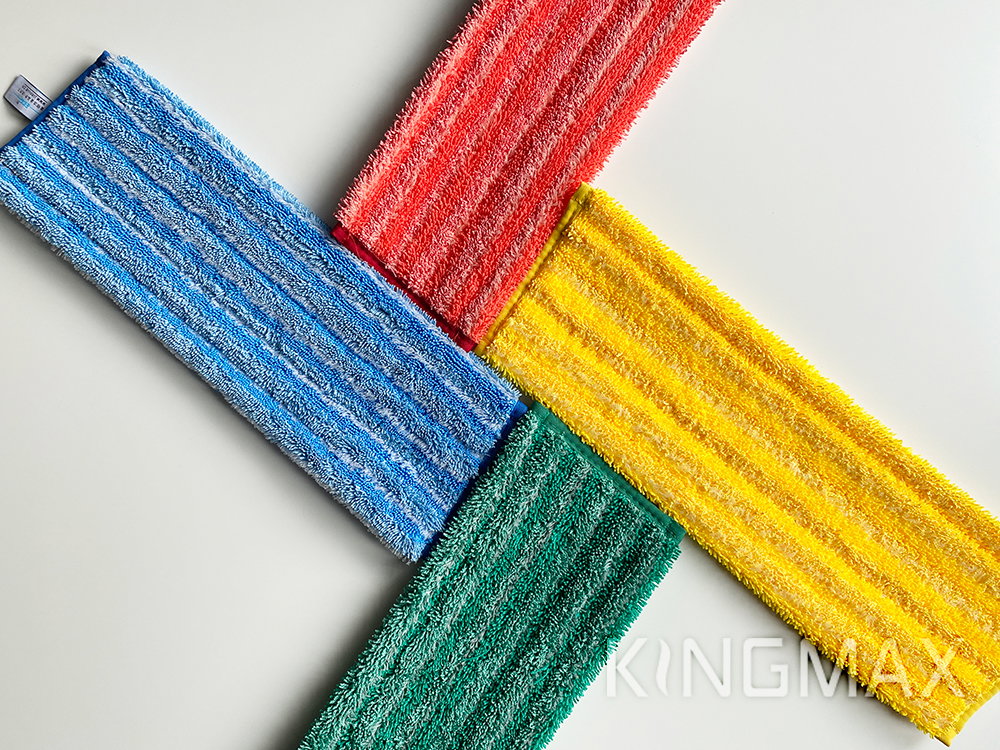
The KINGMAX rPET microfiber scrubbing wet mop pad turns old plastic bottles into a strong cleaning tool. This new idea helps solve the global plastic waste problem by giving used PET containers another purpose. The pad is made of 75% polyester, 15% polyamide, and 10% polypropylene. The polyester part comes from recycled sources, so makers keep plastic waste out of landfills and oceans. This choice cuts down on new plastics, which need oil and heavy energy use to produce.
Regular mop pads use new synthetic fibers that use up resources. The rPET method changes that approach. Each pad lowers carbon emissions compared to regular options. For facility managers who track environmental effects, this clear material info matters. The recycled content gives solid numbers for sustainability reports and official filings. Companies can show their support for circular economy goals just by picking this mop pad over standard ones.
The making process keeps quality high even with recycled materials. Automated production lines keep fiber quality steady, so the green material still works well. The twisted fiber design grabs more dirt, while nylon scrub stripes handle tough spots. This mix proves that caring for the environment and cleaning well can work together in one product.
End-of-Life Strategy: Recyclability and Reduced Landfill Impact
Long-lasting build is the key to this pad's end-of-life plan. The KINGMAX rPET microfiber scrubbing wet mop pad can handle over 300 industrial washes before needing a swap. This long life greatly cuts waste compared to throwaway options. A facility using regular single-use pads might toss dozens each month. With this rPET choice, the same facility replaces pads only a few times a year.
Circular economy ideas focus on keeping materials in use as long as possible. This pad shows that approach with its strong design. Overlock stitching stops fraying, and the hook-and-loop backing keeps it firmly on mop frames. These design features extend the product's life, delaying when it becomes trash. When the pad finally wears out, its polyester content can still be recycled, helping future material recovery.
Circular economy thinking values products that resist early disposal. A mop pad that survives 300 wash cycles shows this idea better than any single-use option.
For groups measuring environmental impact, the numbers look good. Fewer swaps mean less packaging waste, lower shipping emissions, and smaller landfill loads. The cleaning industry usually creates lots of waste from disposable products. This rPET pad offers a way to break that habit. Procurement teams can measure the waste reduction across their work, turning green benefits into clear reporting numbers.
The environmental perks go beyond stopping waste. The pad's low-friction design uses less water during cleaning. Its better dirt pickup cuts the need for chemical cleaners. These work efficiencies add to the green gains, creating a full solution that tackles several environmental impact areas at once.
Performance Benefits of the rPET Microfiber Scrubbing Wet Mop Pad
Superior Scrubbing and Dirt Removal Efficiency
Performance data shows that eco-friendly materials still clean just as well. The rPET microfiber scrubbing wet mop pad grabs 34% more dirt per swipe than regular mops. This big boost comes from twisted fibers that trap dirt deep inside the pad. The nylon scrub stripes handle tough stains that normal mops miss. These stripes create friction right where it is needed without harming delicate floors.
Studies confirm that microfiber works better in many ways. The table below shows how microfiber mops beat cotton mops in controlled tests:
| Metric | Value | Context |
| Dirt pickup improvement | 34% | Microfiber mops pick up about 34% more dirt than cotton mops on concrete floors (from density studies). |
| Surface bacteria removal | 98.9% | Split microfiber mops removed 98.9% of surface bacteria in hospital tests, beating non-split designs. |
| Pathogen transfer reduction | 87% | Clinical trials showed an 87% drop in surface-to-surface pathogen spread with microfiber vs. looped cotton mops. |
| Healthcare-associated infection reduction | 62% | A 2023 hospital study found a 62% decrease in HAIs after switching to color-coded microfiber systems. |
The rPET pad cuts bacteria by about 95% compared to regular mops. This number matters for hospitals, schools, and food service places where hygiene rules are strict. The looped microfiber yarn creates a smooth surface that glides easily across non-slip floors. Users can clean deep dirt from rough surfaces without pushing hard. The mix of scrub stripes and high-absorbency fibers gives a full cleaning solution in one pass.
Durability as a Sustainability Strategy
Durability helps sustainability by cutting waste and resource use. The rPET microfiber scrubbing wet mop pad lasts through over 300 industrial washes before needing a swap. Standard cotton mop pads usually last only 50 to 75 wash cycles. This four-to-six-fold longer life means fewer pads go to landfills each year.
| Material | Wash Cycles |
| Microfiber (quality) | 300–500 |
| Standard cotton | 50–75 |
The long life leads to real cost savings. Facilities replace pads less often, lowering buying costs and storage needs. The proven 25% labor savings comes from the pad's strong dirt pickup and smooth design. Workers finish floor cleaning faster, freeing time for other tasks. Less mopping time also means less water and energy used during cleaning.
The environmental benefits go beyond waste reduction. The smooth design uses less water because the pad holds moisture well. Better dirt pickup cuts the need for chemical cleaners, reducing chemical runoff into wastewater. These savings build up over thousands of cleaning cycles across a facility. Procurement teams can record these savings in sustainability reports, turning routine cleaning into measurable environmental wins. The rPET microfiber scrubbing wet mop pad shows that strong cleaning and environmental care work together in one useful tool.
Strategic Alignment for B2B Buyers and Facility Managers
Meeting ESG Targets and Enhancing Brand Reputation
Facility managers face growing pressure to document every sustainability action. The rPET microfiber scrubbing wet mop pad turns a regular purchase into a reportable ESG metric. Procurement teams can record the recycled content percentage, the reduced waste from longer product life, and the lower water usage from efficient cleaning. These numbers feed directly into CSRD disclosures and internal corporate sustainability scorecards.
Recycled Content: Encourage suppliers to use recycled materials in their products or packaging, thereby creating a circular economy within your supply chain.
The pad's 300-wash lifespan reduces landfill contributions dramatically. Traditional mops create plastic waste that harms habitats and introduces microplastics into ecosystems. Choosing rPET pads shows a commitment to sustainable supply chains. This visible action strengthens brand reputation with clients who evaluate vendor sustainability practices during contract negotiations. Companies that showcase measurable environmental improvements win more bids and retain eco-conscious customers.
Future-Proofing Procurement with a Reliable Supplier
KINGMAX operates as a leading OEM microfiber supplier with automated production lines. These systems include automated quality checks that maintain consistent output, reduce waste, and improve efficiency. For risk-averse procurement teams, this reliability matters as much as the product's green credentials. A supplier that delivers uniform quality batch after batch prevents operational disruptions.
Certifications provide additional assurance for sustainable investment decisions. The Global Recycled Standard (GRS) verifies that products contain a minimum of 20% recycled material and audits the entire supply chain for traceability and environmental principles. ISO 14001 certification indicates a formal environmental management system.
| Certification | What it indicates |
| ISO 14001 | An organization-wide environmental management system (EMS) standard. It shows the supplier has a formal system for managing environmental goals, regulations, and sustainability initiatives. |
| GRS (Global Recycled Standard) | Verifies that a product contains a minimum of 20% recycled material. It audits the entire supply chain for traceability, environmental principles, social requirements, and chemical content, ensuring responsible production of recycled goods. |
These certifications give procurement teams confidence that their cleaning supplies meet rigorous environmental standards. Partnering with a certified supplier future-proofs purchasing decisions against tightening regulations. The combination of automated quality control and verified recycled content positions KINGMAX as a strategic partner for organizations pursuing ambitious corporate sustainability targets.
The rPET microfiber scrubbing wet mop pad solves a macro-problem. It navigates regulatory risks, satisfies circularity demands, and delivers operational savings. This product proves cleaning performance and sustainability coexist. Adopting this tool aligns with 2026 sustainability trends, strengthens corporate sustainability goals, and enhances corporate sustainability reporting. This choice improves cleaning outcomes. Early adoption positions organizations as industry leaders.
FAQ
How does the rPET material support sustainability goals?
The rPET material comes from recycled plastic bottles. This choice lowers carbon emissions. It keeps plastic waste out of landfills.
What performance benefits does the rPET mop pad offer?
The pad picks up 34% more dirt per swipe. It reduces bacteria by 95%. This makes it effective for daily cleaning.
How does this product help with regulatory compliance?
Procurement teams can record this cleaning tool's recycled content for CSRD compliance. It also supports circular economy targets.
Comments